


Online Fitness Trainer: What They Do, What They Cost, and How to Hire the Right One
- dillonrmurrayKLyc8
- Aug 6
- 5 min read

Introduction
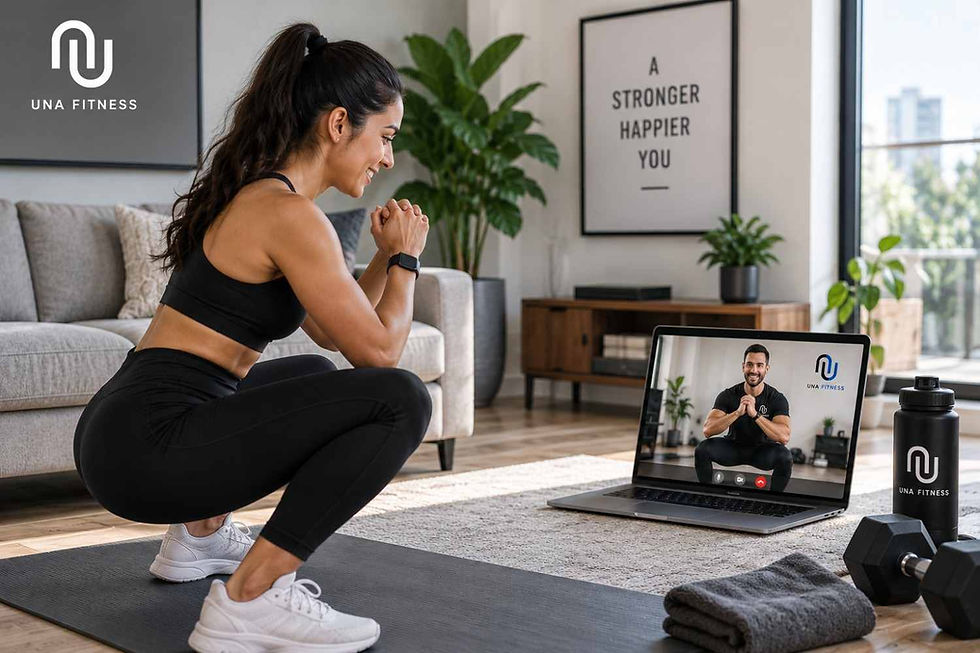
An online fitness trainer builds and manages your workout plan remotely, guiding you through video, messaging, and app-based check-ins instead of meeting you at a gym. If you've been comparing your options and wondering whether a virtual trainer can actually replace one you'd see in person, the short answer is: for most people, yes, as long as you pick someone qualified and stay consistent with check-ins. This guide walks through exactly what an online fitness trainer does day to day, what reasonable rates look like, and how to vet one before you hand over your card details.
What Does an Online Fitness Trainer Actually Do?
An online fitness trainer's job goes well beyond emailing you a spreadsheet of exercises. A trainer worth paying for typically handles:
Assessment first. Before writing a single workout, a good trainer asks about your training history, injuries, equipment, schedule, and goals.
Custom programming. Your plan should reflect your actual life, not a template pulled from a generic library.
Ongoing adjustments. As you get stronger or your schedule shifts, the plan should evolve with you.
Form feedback. Most trainers use video submissions to catch technique issues before they turn into injuries.
Accountability check-ins. Regular contact, whether a quick weekly text or a full video call, keeps you on track when motivation dips.
The trainer relationship is the differentiator. A subscription app with no human behind it is a workout library. A trainer is a person actively managing your plan.
Online Fitness Trainer vs. Fitness App: What's the Real Difference?
People often confuse the two, so it's worth separating them clearly.
Factor | Online Fitness Trainer | Standalone Fitness App |
Plan origin | Built specifically for you | Pre-made or algorithm-generated |
Adjustments | Made by a human based on your feedback | Limited to app logic or none at all |
Form correction | Personal video review | Usually none, or generic demo clips only |
Accountability | Direct, personal check-ins | Push notifications and streaks |
Cost | Higher, reflects human time | Lower, flat subscription fee |
Best for | Anyone wanting real guidance and adjustment | Highly self-motivated, experienced trainees |
If your budget only stretches to an app, that's still better than doing nothing. But if you've tried an app and stalled out or gotten hurt from poor form, a real trainer is usually the next step.
Types of Online Fitness Trainers
Generalist trainers Work with a broad range of clients on general strength, fat loss, or conditioning goals. A solid starting point if you don't have a highly specific need.
Sport-specific trainers Specialize in a single discipline, such as powerlifting, running, or CrossFit-style training. Worth seeking out if you're chasing a specific performance goal.
Medical or rehab-focused trainers Work alongside physical therapy or manage clients with joint issues, pregnancy considerations, or chronic conditions. Look for additional certifications here, not just a standard personal training credential.
Nutrition-inclusive trainers Bundle meal or macro guidance with the training plan. Useful if food, not just workouts, has been your sticking point.
What Should an Online Fitness Trainer Cost?
Rates vary by experience, specialization, and how much direct access you get:
Entry-level or newer trainers: roughly $80–$150 per month
Established trainers with a strong track record: roughly $150–$300 per month
Specialized or high-demand trainers (sport-specific, medical background): roughly $300–$600+ per month
Group coaching under a trainer's program: roughly $50–$120 per month
A higher price tag isn't a guarantee of better coaching, but a rate that seems unusually low for full 1-on-1 access is worth questioning. Ask exactly what's included before assuming a lower price means the same service.
Step-by-Step: How to Hire the Right Online Fitness Trainer
Step 1: Write down your goal in one sentence. "Lose 20 pounds by summer" and "build strength for my first powerlifting meet" call for different trainers. Clarity here narrows your search fast.
Step 2: Verify certification and education. Confirm a recognized certification (NASM, ACE, ISSA, NSCA, or similar) and ask directly about relevant education or specialized training for your goal.
Step 3: Ask how check-ins actually work. Get specifics: how often, through what platform, and typical response time to messages. If the answer is vague, that's a preview of what working together will feel like.
Step 4: Ask for a sample week of programming. A trainer confident in their work will usually share a sample plan or describe their typical week structure without hesitation.
Step 5: Look for reviews or client outcomes tied to your specific goal. General five-star reviews are nice, but look for feedback from clients with a goal similar to yours.
Step 6: Confirm the cancellation and contract terms. Understand what happens if it's not working out, month-to-month flexibility is a good sign of a trainer confident in their retention rate.
Common Mistakes When Working With an Online Fitness Trainer
Ghosting on check-ins. The accountability structure only works if you actually participate in it.
Not asking questions. Confusion about an exercise or a plan change should be raised immediately, not guessed at.
Comparing your trainer's plan to someone else's on social media. Programs are individualized for a reason; a plan built for someone else's body and goals isn't a fair comparison.
Choosing a trainer purely because of their own physique. Looking fit doesn't automatically mean someone can coach well. Credentials and communication matter more.
Skipping the assessment phase. If a trainer sends you a generic plan without asking about your history or equipment first, that's a red flag worth taking seriously.
Expert Tip
Ask a prospective trainer how they'd adjust your plan if you missed three workouts in a row due to a busy week. Their answer reveals a lot: a good trainer talks about flexibility and getting you back on track without guilt, while a rigid or dismissive answer suggests a one-size-fits-all approach hiding behind a personalized label.
Key Takeaways
An online fitness trainer provides custom programming, form feedback, and accountability remotely, not just a workout template.
The main difference from a fitness app is the human relationship: adjustments, feedback, and check-ins from a real person.
Rates typically range from around $80/month for newer trainers to $600+/month for specialized, high-demand trainers.
Vet a trainer through certification, communication structure, and goal-specific client outcomes before signing up.
Consistency on your end, showing up to check-ins and submitting form videos, determines most of the results.
FAQs
Is an online fitness trainer worth it compared to a free workout app? For anyone who has stalled out with generic app plans or wants real accountability, yes. The human feedback and personalized adjustments typically produce better long-term adherence than a static app plan.
How does an online fitness trainer correct my form if they're not in the room? Most rely on short video clips you submit of your lifts, reviewed within a day or two, plus written or verbal feedback. Some also offer live video calls for real-time correction on more technical movements.
Can an online fitness trainer help me if I'm a complete beginner? Yes, though beginners benefit from trainers who build in a slower ramp-up and prioritize video form checks early on, since foundational technique matters most in the first few months.
Do online fitness trainers create meal plans too? Some do, others focus purely on training and refer you to a nutrition coach or registered dietitian. Confirm this upfront if nutrition guidance is a priority for you.
How quickly will I see progress with an online fitness trainer? Most clients notice better consistency and strength gains within 4–6 weeks, with more visible physical changes generally showing up around the 8–12 week mark, depending on starting point and adherence.
Final Verdict
A qualified online fitness trainer can deliver results that rival in-person training, provided you choose someone with real credentials and a clear communication process, and you hold up your end by showing up to check-ins and submitting form videos. The convenience of training on your own schedule, without a commute or fixed class times, has made this one of the most practical ways to get expert guidance in 2026. Take the vetting steps seriously, ask direct questions before committing, and treat the relationship as a genuine partnership rather than a one-way subscription.


Comments